Back to briefing room
QR Restaurant SaaS
CS-002 · Field reportSaaS

QR Restaurant SaaS

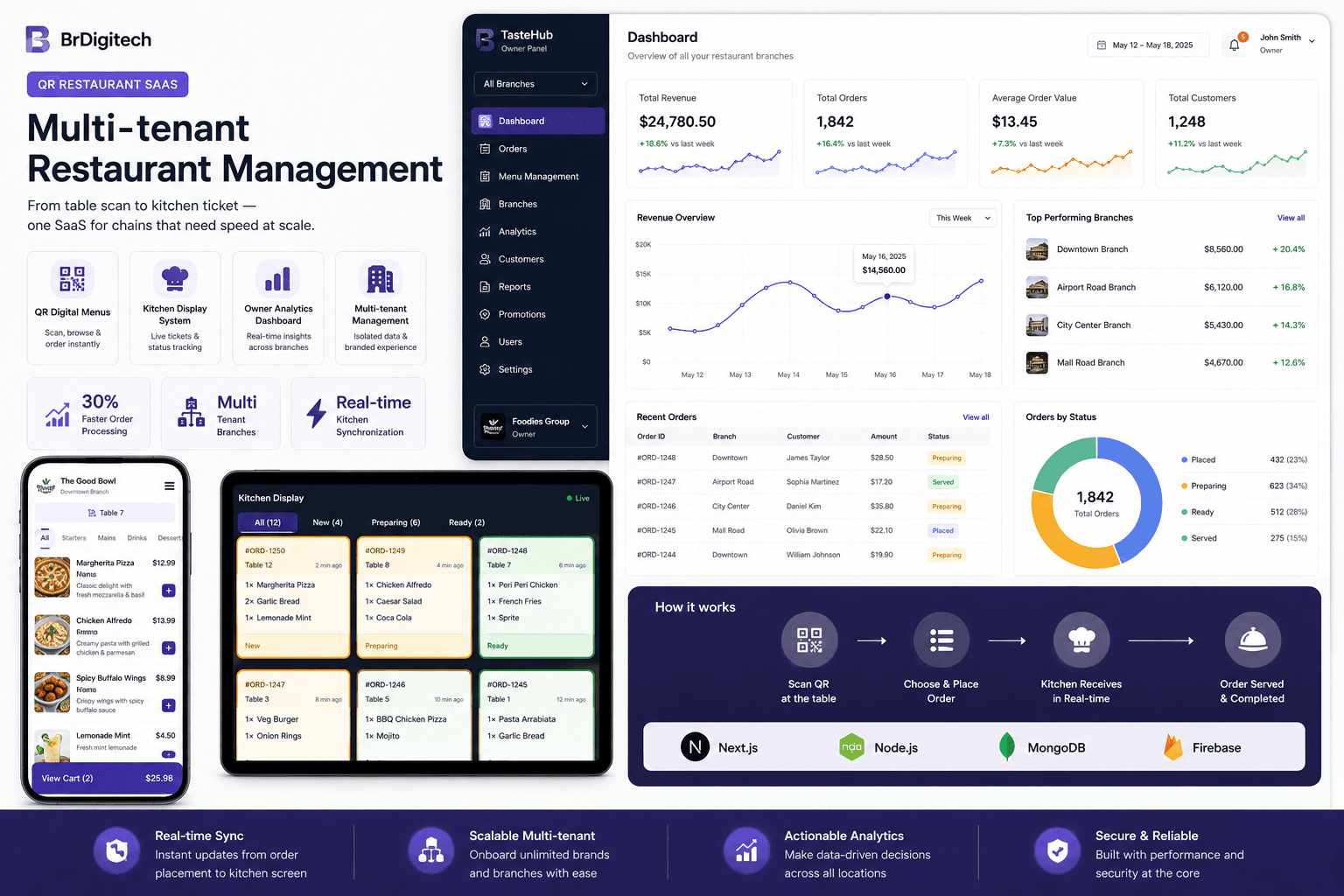
QR-first ordering that reduced peak-hour processing time by 30%.

30%

Faster orders

Multi

Branch tenants

Live

Kitchen sync

BrDigitechFull Stack Engineer12 weeks · MVP to production

Restaurant chains needed digital menus and kitchen coordination without replacing entire POS stacks. We shipped a multi-tenant SaaS with QR ordering, real-time ticket flow, and owner analytics — cutting order processing time by 30% during peak hours.

Before → After

Paper menus & phone calls

QR scan → instant ticket

Blind kitchen backlog

Live KDS queue

Per-branch spreadsheets

Owner analytics hub

Context

Chains operated on paper menus and phone-heavy coordination between floor and kitchen.

Owners lacked cross-branch visibility into throughput and peak bottlenecks.

Product goal: one SaaS tenant per brand with branch-level menus and permissions.

The challenge

Fragmented operations slowed orders, created kitchen backlog, and made scaling new branches a manual, error-prone process.

The response

Built end-to-end multi-tenant SaaS with dynamic QR menus, order state machine, kitchen display views, and centralized owner dashboards powered by Firebase real-time updates.

How it unfolded

01

Situation

Peak-hour delays and static menus hurt revenue; owners had no single view across locations.

02

Strategy

QR as the entry point; strict order lifecycle; kitchen UI as a first-class persona.

03

Execution

Shipped tenant onboarding, menu publish flow, KDS screens, and branch analytics in phased releases.

04

Outcome

30% faster processing, reliable kitchen sync, and scalable multi-branch rollout.

Architecture decisions

Order state machine

Explicit states (placed → preparing → served) prevented race conditions between customer, server, and kitchen views.

Firebase for kitchen fan-out

Low-latency push to kitchen devices without overloading the core API during rush periods.

Safe menu publishing

Versioned menu publishes avoid breaking in-flight orders when prices or items change.

Implementation approach

  • Multi-tenant data isolation per restaurant brand
  • Dynamic QR menu generation per branch
  • Real-time order pipeline with kitchen subscribers
  • Role-based admin for owners vs branch managers

Measured results

  • 30% reduction in average order processing time
  • Multi-branch rollout without per-location code forks
  • Real-time kitchen synchronization under peak load
  • Owner analytics for revenue and peak-hour staffing

Lessons learned

  1. 01Kitchen UX matters as much as customer UX — large-type, scan-friendly flows win at the pass.
  2. 02Menu changes need publish semantics; live edits without versioning break trust.
  3. 03Peak load testing on order writes early prevents painful Friday-night outages.

Technology

Next.jsNode.jsMongoDBFirebaseSocket.IO

Related build

View product dossier

Technical features, stack, and architecture notes

Next report · CS-001

Enterprise ERP Platform

How modular architecture cut enterprise onboarding time by 40%.

Work together

Need similar outcomes on your product?

Share your constraints and goals — I'll outline how we'd approach architecture and delivery.